

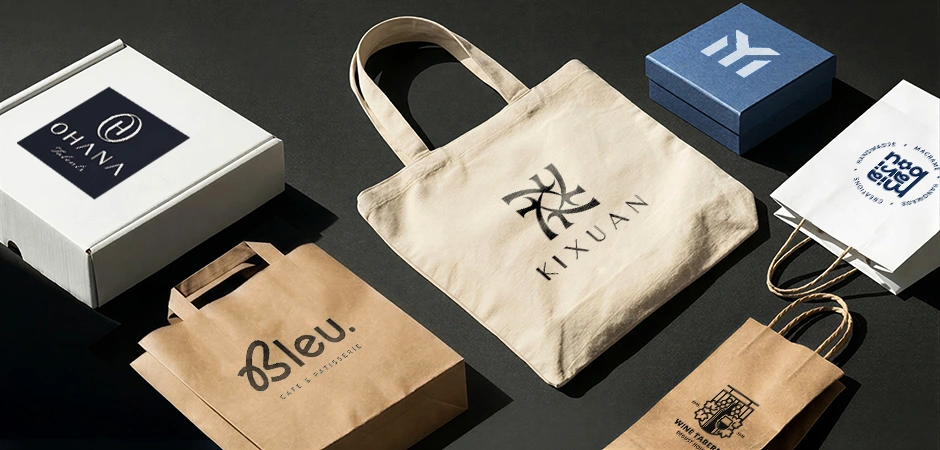
If you’ve ever found yourself wondering whether your packaging supplier is actually any good — or whether the one you’re thinking of switching to is worth the move — you’re not alone. It’s one of those things buyers rarely get a clear answer on. Packaging feels simple until it isn’t, and the difference between a good supplier and a frustrating one usually shows up at the worst possible moment: a tight deadline, a dodgy proof, an unexpected cost, a delivery that doesn’t land when it should.
So we thought we’d save you the trial-and-error. We’ve put together a proper, practical checklist — ten things every printed packaging supplier should be doing for you. Not hypothetical stuff. Not fluff. Things you can actually test, ask about, or look for the next time you’re getting a quote.
Use it however you like. Grade your current supplier. Benchmark a new one. Or just keep it in your back pocket for the next time someone on the team asks, “Are we getting a good deal here?”
Here we go.
1. They should give you options on price — not just the cheapest one
Cheapest isn’t the same as best, and the best packaging suppliers know it. What you actually want is choice. A good supplier will show you a range of price points and explain what’s driving the difference — the material, the print method, the country of origin, the handle type, the quantity. They’ll tell you where you can save money without compromising the result, and where you shouldn’t.
Practical tip: Ask for two or three quotes for the same brief, each built differently — for example, one sourced from the UK and one from the Far East, or one run at 2,500 units and one at 5,000. If your supplier can’t (or won’t) do that, it’s a red flag. A good supplier sees price as a conversation, not a take-it-or-leave-it number.
2. They should actually pick up the phone (and reply to your emails quickly)
This one sounds obvious, but it’s the single most common complaint we hear from buyers who are switching suppliers. Quotes that take a week. Phone calls that go to voicemail. Emails that get “chased” three times before anyone answers.
Communication is the difference between a supplier relationship that runs smoothly and one that quietly eats your afternoon. You should expect quick, clear responses — especially when you’ve got a deadline, a proof to approve, or a stock-level decision to make.
Practical tip: Pay attention during the enquiry stage. How quickly did they reply to your first email? Did a real human answer the phone? Did they make time to actually talk you through your options, or did they just fire over a PDF? The way a supplier communicates before you’re a customer is usually the best version you’ll get. It doesn’t improve once the order is in.
3. They should send you free samples — and help you understand them
Talking about quality is one thing. Holding it in your hand is another. A proper packaging supplier should be happy to send you free samples of anything they’re quoting on, and — more importantly — talk you through what you’re looking at.
Not every paper bag is the same. GSM, handle type, lamination, coating, print method — these all affect how the bag looks, feels, and performs. A good supplier won’t just post you a sample; they’ll help you understand what you’re comparing so you can make a proper decision.
Practical tip: Request samples before you commit to any printed run. And don’t be shy — ask for alternatives too. “Can I see a 170gsm and a 220gsm side by side?” is a perfectly fair question. If your supplier treats samples like a hassle, they’re probably treating everything else like a hassle as well.
4. They should offer a proper range of products and sourcing options

Printed carrier bags, printed paper bags, printed tissue paper, printed ribbon, coffee cups, gift boxes, mailing bags, cotton bags, jute bags — branded packaging comes in a lot of shapes, and the right one for you depends on your brand, your budget, your product and your customer.
On top of that, where packaging is sourced matters. UK production typically offers shorter lead times. European production can be a sweet spot between speed and cost. Far East production often opens up finishes, embellishments and price points you simply can’t get closer to home. A good supplier gives you access to all of it and helps you weigh up the trade-offs.
Practical tip: Ask your supplier where their products are made, and whether they can source the same brief from more than one region. A supplier tied to one factory in one country is, by definition, offering you a narrower set of options than one with a proper global network.
5. They should have staff who actually know their stuff
This is a big one. Custom branded packaging is a technical product. Flexo versus litho. Coated versus uncoated. PMS matching on kraft. How fine a line can actually hold on a cotton weave. Whether a foil block will work on a laminated finish. These aren’t small details — they’re the difference between packaging you’re proud of and packaging you quietly hope nobody looks at too closely.
Your supplier’s team should know this stuff inside out. They should also take the time to get to know you — your business, your brand, your customers — so they’re not just quoting products, they’re solving problems.
Practical tip: Test them. Ask a slightly technical question and see what happens. “What’s the difference between flexographic and lithographic printing for my brief?” is a great one. A good supplier will give you a real, useful answer. A poor one will either wing it, get it wrong, or try to change the subject.
6. They should help with your artwork — not leave you to figure it out
Artwork is where a lot of packaging projects quietly fall over. Files in the wrong format. Fonts that aren’t outlined. Logos that look beautiful on a business card and muddy on a kraft paper bag. Colours that shift when printed on brown instead of white.
A good supplier will guide you through all of this. They’ll tell you if your logo is too fine for the substrate. They’ll flag colour issues before you approve the proof. Ideally, they’ll offer free artwork redrawing if your files need a bit of love, and a proper design consult if you’re starting from scratch.
Practical tip: Ask what happens if your artwork isn’t print-ready. If the answer is “we’ll send it back to you” — that’s a supplier. If the answer is “we’ll redraw it for you, check it against the substrate, and show you a proof before anything goes to print” — that’s a partner.
7. They should have real answers on sustainability, EPR and plastic tax
Sustainability in packaging isn’t a marketing tick-box anymore — it’s a practical, technical, sometimes legislative issue. Extended Producer Responsibility (EPR) is live. Plastic Packaging Tax affects real invoices. Customers are asking sharper questions about recyclability, FSC certification, compostability and carbon footprint than they were even a couple of years ago.
Your supplier should be able to talk you through all of it — clearly, without jargon, without greenwashing. They should know which of their products are FSC-certified, which are plastic-free, which are recyclable kerbside, and what the legislative implications are for your business.
Practical tip: Ask your supplier what EPR means for the specific products you buy from them, and whether their packaging is compliant. If they can’t give you a straight answer, they’re not close enough to the issue — and that gap could end up on your desk rather than theirs.
8. They should be able to scale with you
A good packaging supplier should work just as well for a single-shop independent ordering their first 500 printed paper bags as they do for a multi-site retailer rolling out consistent branded packaging across 40 locations.
That scalability matters because businesses grow. The supplier who’s perfect for your first order might hit a wall when you need 20,000 units in three colours, split across two delivery addresses, to a tight deadline. And the supplier who handles huge contracts might not be interested in a small first run.
Practical tip: Ask about the range of clients they work with. Who’s their smallest customer? Who’s their largest? Do they offer managed stock or call-off programmes (sometimes called Stock and Serve or similar) for when your ordering becomes regular? A supplier who can grow with you is worth far more than one who fits you right now but not in two years.
9. They should stand behind their work with a real guarantee
Every supplier says they do good work. Fewer are willing to put a guarantee behind it. A proper guarantee isn’t marketing — it’s a supplier telling you, in practical terms, what happens if something goes wrong. Price match if you find the same spec cheaper elsewhere. Delivery date guarantee so you’re not stuck the week of a launch. A quality promise that means if you’re genuinely not happy, you get your money back.
Practical tip: Ask your supplier — or any supplier you’re considering — exactly what their guarantee covers. Not a vague “we’ll sort it” answer. The specifics. What happens if the print is wrong? What happens if the delivery is late? What happens if you open the box and it’s just not what you approved? A supplier with a clear, written answer to those questions is a supplier worth working with. (Ours, for the record, covers price, delivery date and quality — all backed up in writing.)
10. They should have a wall of honest reviews — and keep asking for more
https://www.feefo.com/en-GB/reviews/carrier-bag-shop
Online reviews are one of the easiest, most honest ways to sense-check a supplier. Not just the score — the volume and the consistency. A supplier with twelve reviews all posted in the same month is telling you something very different from one with hundreds of reviews accumulated steadily over several years.
Everyone gets the occasional dud — that’s business. What matters is the overall pattern, how they respond to criticism, and whether they’re actively and regularly asking customers for feedback. A supplier who’s confident in their service will be actively chasing reviews. A supplier who isn’t, won’t.
Practical tip: Look up your supplier (or prospective supplier) on an independent review platform like Feefo, Trustpilot or Google. Don’t just read the 5-stars — read a couple of the 1-stars too, and see how the company responded. That tells you more about how they handle problems than any brochure ever will.
So, how does yours measure up?
If you’ve just mentally ticked off ten from ten for your current supplier — brilliant. Stick with them. If a few boxes went unchecked, it might be worth having a conversation (either with them, or with someone else).
At Carrier Bag Shop, we’ve spent 40 years supplying printed and custom branded packaging to retailers, exhibitors and businesses across the UK and Europe. The checklist above is genuinely how we think about our own service — it’s the benchmark we hold ourselves to, not a list of things we’re telling you to go and demand of someone else.
If you’re weighing up suppliers right now, or you’ve got a packaging project coming up and you’d just like to talk it through with someone who knows the industry inside out, get in touch. No pressure, no hard sell — just a proper conversation about what you need and how best to get it.
That’s really what a good packaging supplier should be, when you boil it all down: someone who makes your job easier, not harder.
Further reading
- Why Carrier Bag Shop — a closer look at what we do and how we do it
- Our Process — exactly how ordering printed packaging with us works, from first quote to final delivery
- Our Service — including our Stock and Serve programme for ongoing packaging needs
- Testimonials — what our clients actually say about working with us